

- Pauline Boghen & Wenxi Zhu
- Posted on
- Chonburi, Thailand
The IOC Sub-Commission for the Western Pacific (WESTPAC), in collaboration with the Department of Marine and Coastal Resources (DMCR) of Thailand, successfully organized a three-day international training workshop on Environmental DNA (eDNA) Applications in Marine Biodiversity Monitoring and Assessment. The workshop was generously supported by the Thai National Commission for UNESCO, Ministry of Education, Thailand, with technical contributions from international partner institutions, including Mahidol University, Kasetsart University, Yunnan University, and Nanjing University.
More than fifty governmental officials, marine resource managers, and researchers from 11 Member States across the Western Pacific participated in this workshop, reflecting the region’s growing interest in applying innovative technologies to strengthen marine biodiversity monitoring and conservation.
Environmental DNA (eDNA) has emerged as an innovative tool for detecting species from genetic material shed into the environment, providing a cost-effective, non-invasive, and scalable complement to conventional biodiversity monitoring methods. As the Western Pacific hosts the world’s richest marine biodiversity, strengthening the region’s capacity to monitor marine biodiversity and detect its change over a range of spatial and temporal scales is essential for designing and implementing effective conservation and management measures and evaluating their long-term impacts. Increasingly, eDNA-based biodiversity monitoring is developing rapidly and progressively being applied to support evidence-based marine ecosystem management.
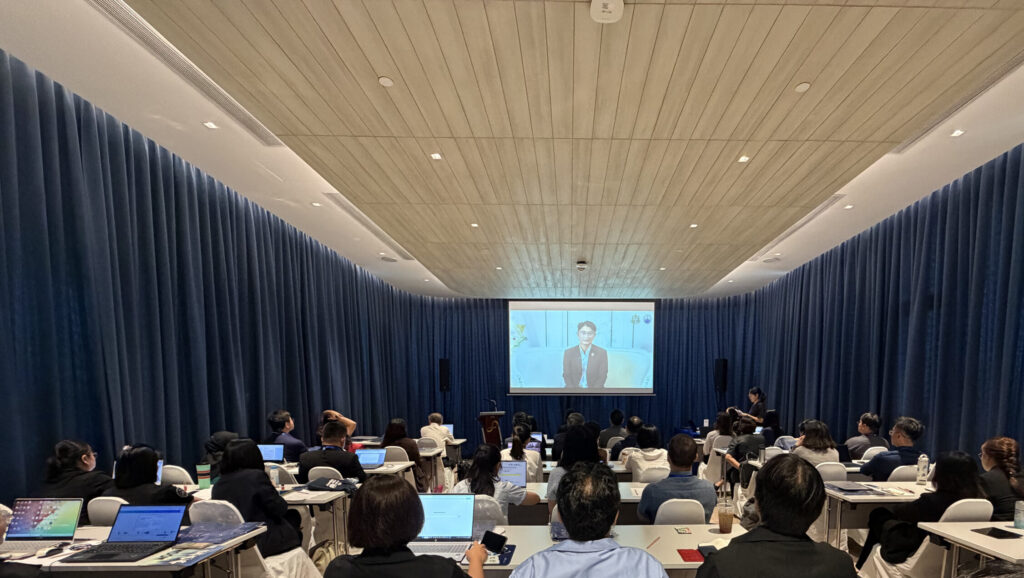
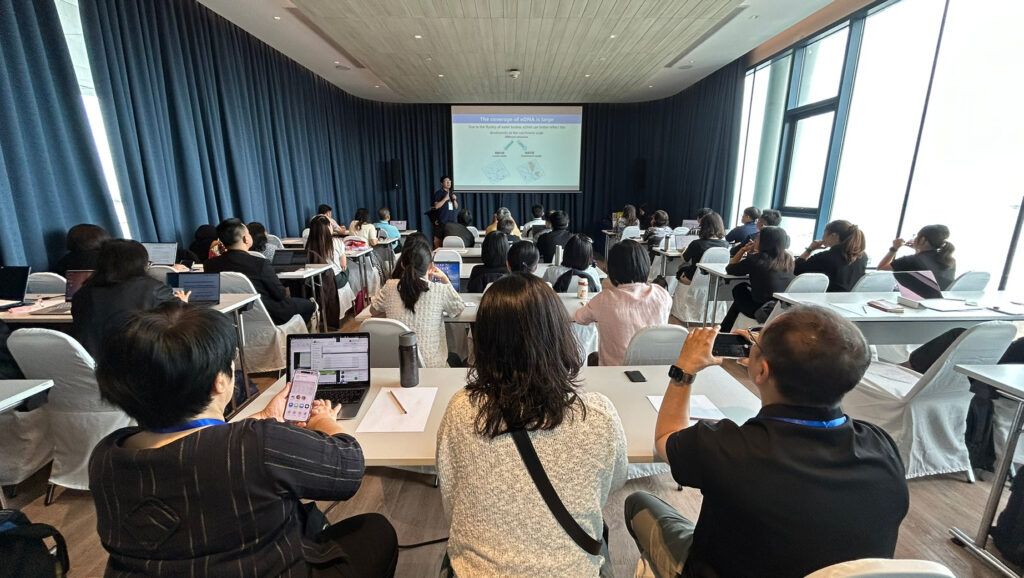
The workshop opened with two keynotes that provided participants with a comprehensive introduction to the scientific principles, methodologies, and practical applications for eDNA biomonitoring for marine ecosystem management. Participants from 11 Member States presented their current status on eDNA based monitoring in their respective countries, shared common challenges and limitations, identified priority capacity development needs, and discussed opportunities for future collaboration under the framework of the Sub-Commission.
The second day focused on the complete eDNA monitoring workflow, covering the principles and technical guidelines for eDNA sampling and sample preservation, laboratory set-up and contamination control, DNA extraction, PCR amplification, sequencing, bioinformatics, data analysis, and interpretation. To complement the technical sessions, participants joined a hands-on demonstration at the Sriracha Fisheries Research Institute, where they gained first-hand experience in field sampling, sample preservation, laboratory DNA extraction, and PCR amplification.
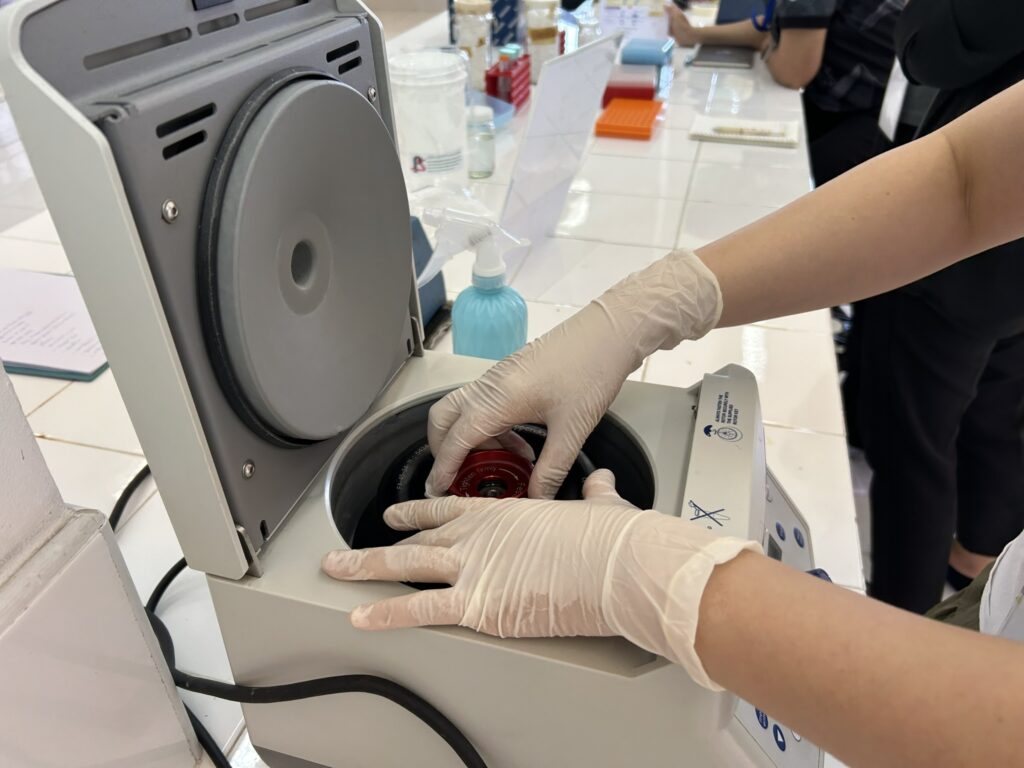
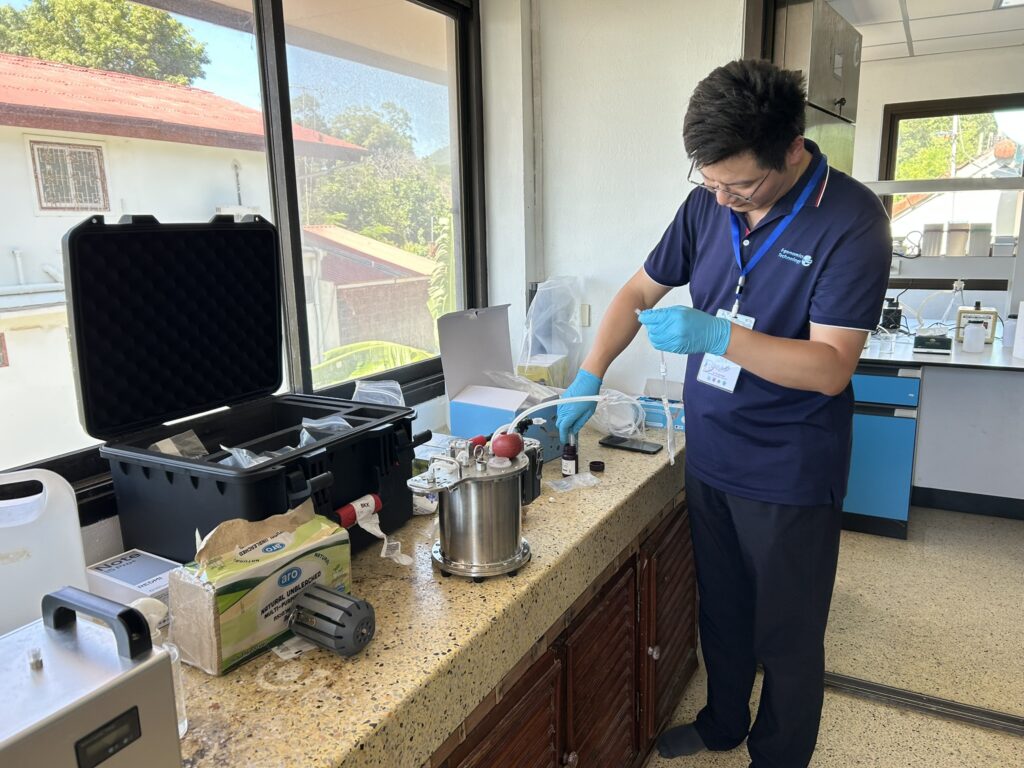
The final day was devoted to interactive discussions on future cooperation. Participants reflected on the knowledge and skills gained during the training and explored practical approaches for integrating eDNA techniques into their national marine biodiversity monitoring efforts.
This workshop built upon the foundation established by the first regional eDNA training workshop that WESTPAC initiated in November 2023, Phuket, Thailand. The pilot workshop introduced the fundamental concepts and methodologies of eDNA and demonstrated the strong demand for regional cooperation in this rapidly evolving field.
It is evident that a momentum was generated for further promoting eDNA monitoring and its applications in the region. Participants emphasized the importance of sustaining regional collaboration, harmonizing monitoring methodologies, sharing and enriching reference data, and expanding the practical application of eDNA across the Western Pacific.
The IOC Sub-Commission for the Western Pacific (WESTPAC) will continue to advance the development and applications of eDNA-based marine biodiversity monitoring through the research and analysis on eDNA national strategies and case studies, the advancement of technical and technological capacity, and the development of pilot monitoring projects or activities for seagrass habitats, coral reefs, mangroves, and endangered species.
These efforts will contribute to more effective biodiversity conservation, evidence-based marine ecosystem management, and the implementation of national and international biodiversity commitments throughout the Western Pacific such as the Global Biodiversity Framework.
External Coverage
- กระทรวงศึกษาธิการ ร่วมกับกรมทรัพยากรทางทะเลและชายฝั่งและ IOC/WESTPAC จัดฝึกอบรมภายใต้หัวข้อ การพัฒนาศักยภาพการประเมินความหลากหลายทางชีวภาพทางทะเลด้วยเทคโนโลยี eDNA
- โครงการฝึกอบรมด้านเทคโนโลยี eDNA ภายใต้โครงการทุนรัฐบาลไทย–ยูเนสโก เสริมสร้างศักยภาพการอนุรักษ์ความหลากหลายทางชีวภาพทางทะเล
- ปิดฉากการอบรม eDNA ด้วยเวทีระดมความคิด สู่เครือข่ายความร่วมมือด้านวิทยาศาสตร์ทางทะเลในระดับภูมิภาค
- สถาบันชีววิทยาศาสตร์โมเลกุล มหาวิทยาลัยมหิดล ร่วมถ่ายทอดองค์ความรู้ด้าน eDNA เพื่อการศึกษา วิจัย และการติดตามความหลากหลายทางชีวภาพทางทะเลในระดับนานาชาติ